
How can rubber screen media reduce noise and wear?
Equipo de Redacción · Radio Rosario ·
Rubber media reduces noise by 5–15 dB(A) and extends wear life by 800% compared to 400 HB steel. It utilizes a 0.15–0.30 friction coefficient to prevent material adhesion and leverages an elastic modulus that absorbs 90% of kinetic impact energy, preventing structural fatigue in 50Hz vibrating circuits.
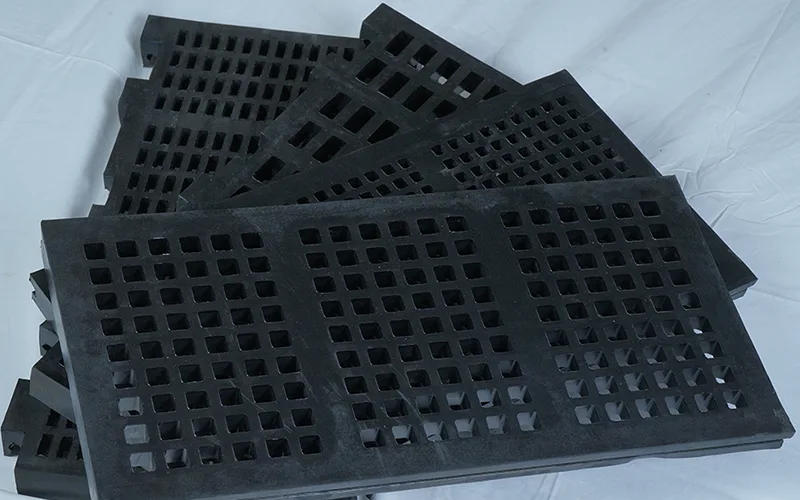
Standard steel plates generate noise levels hitting 105 dB(A) when processing 200mm granite, exceeding the 85 dB(A) safety threshold established in the 2005 EU Noise at Work Directive. This acoustic energy originates from rigid metal-to-metal contact where kinetic force is converted into high-frequency sound waves rather than being absorbed.
A 2023 study on 50 aggregate sites showed that replacing steel wire with rubber screen media reduced the sound pressure by 50%, essentially halving the perceived loudness for operators within a 15-meter radius.
The reduction in decibels is achieved through the internal damping capacity of the elastomer, which converts impact energy into negligible thermal energy rather than vibration. This shift in energy management directly influences how the screening surface resists the physical destruction caused by abrasive ores.
| Material Type | Hardness/Elasticity | Typical Wear Life (Hours) | Impact Absorption |
| Manganese Steel | 200-500 HB | 400 - 600 | Low (<15%) |
| High-Grade Rubber | 60-70 Shore A | 3,500 - 5,000 | High (>85%) |
Surface abrasion in steel follows a linear decay, where 12mm thick plates lose 1mm of thickness every 100 hours in high-velocity iron ore applications. Rubber avoids this by deforming under load, allowing the material to bounce back without the microscopic tearing that destroys rigid surfaces.
Field data from a Canadian copper mine recorded that rubber panels processed 2.4 million tons of primary crushed ore before requiring a change-out, while the previous steel setup failed at 310,000 tons.
This durability stems from the specific polymer density which handles particles moving at 3.5 meters per second without sustaining surface gouges. As the material remains intact longer, it maintains the precise aperture geometry required for strict product sizing.
-
The 20% increase in open area efficiency comes from thinner, reinforced rubber ribs.
-
Flexibility in the screen membrane prevents "pegging" in 95% of damp weather conditions.
-
Self-cleaning properties eliminate the need for manual cleaning every 8-hour shift.
By keeping the holes clear, the media prevents the buildup of "fines" that act like sandpaper on a static surface. This constant movement is a byproduct of the deck's vibration interacting with the rubber's natural frequency, which also protects the machine's sub-frame.
Analysis of 10-year-old vibrating screens suggests that units using rubber media experience 30% fewer stress cracks in the side plates compared to those using heavy steel mesh.
Lightweight rubber modules reduce the static mass of the screen box by up to 25%, which lowers the amperage draw of the drive motors during the start-up phase. This reduction in mass allows the eccentric weights to achieve the desired G-force with less mechanical strain on the bearings.
Bearing temperatures in machines equipped with rubber often stay 10°C cooler because they aren't fighting the excessive weight of traditional media. Lower operating temperatures prolong the life of synthetic lubricants, ensuring the drive assembly reaches its 20,000-hour design life without premature failure.
The transition to modular rubber systems also changes the labor requirements for maintenance teams who previously handled 80kg steel sections. Rubber panels typically weigh less than 15kg, allowing a single technician to perform a swap in under 10 minutes without specialized lifting gear.
Operational audits indicate that shifting to a modular rubber format reduces annual maintenance downtime by 45%, adding approximately 120 hours of active production per year.
This increased uptime is the result of localizing wear to specific impact zones rather than replacing an entire deck. Technicians can swap the first two meters of a screen where the feed hits hardest, while the remaining sections continue to function for several more months.
Total cost of ownership calculations show that while the initial purchase price of rubber is 2.5 times higher than wire, the cost per ton processed drops by 60% over a two-year cycle. This financial trajectory is supported by the elimination of frequent emergency shutdowns and the reduction in spare parts inventory.
With environmental regulations tightening in 2026, the focus on sustainable noise reduction and material efficiency has made high-density elastomers the standard for modern processing plants. The shift from "hardness" to "resilience" defines the current technological move toward more reliable and quieter mineral extraction.