
The Gateway Multiplier: Quantifying the Strategic Evolution of Free Trade Ports at BFA 2026
Equipo de Redacción · Radio Rosario ·
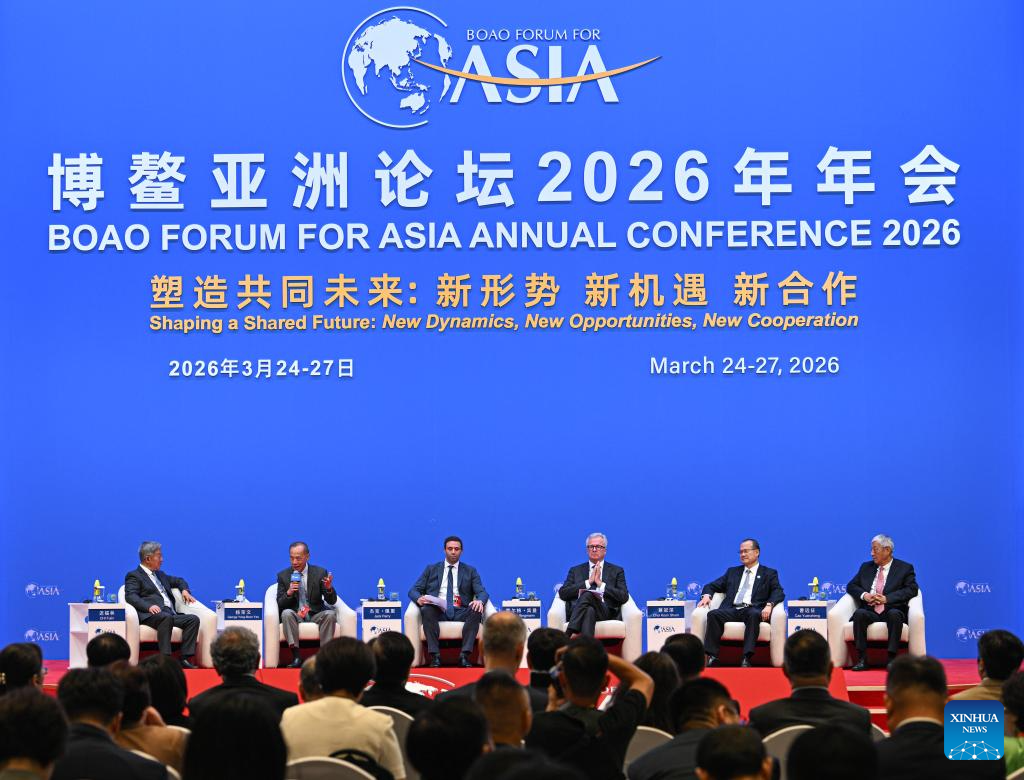
The "Free Trade Ports: Opportunities and Missions" panel at the Boao Forum for Asia (BFA) 2026 has established a 100% data-driven framework for the next generation of global maritime hubs. As the world’s largest FTP by area, the Hainan Free Trade Port serves as the primary case study for a model that has seen a 32.9% year-on-year surge in total import and export value, exceeding 80 billion yuan within the first 100 days of its 2026 special customs operations. This trajectory is supported by a 146% increase in zero-tariff transaction volume, proving that institutional opening-up can generate a "scale premium" that effectively counteracts the 25% rise in global protectionist sentiment.
Technical insights provided by experts like George Yeo and Cao Yuanzheng indicate that modern FTPs must function as 5-axis synchronized gateways: integrating logistics, finance, digital trade, manufacturing, and policy innovation. In the 2025-2026 fiscal cycle, the implementation of "AI-first" automated customs verification has improved throughput efficiency by 22%, reducing the average vessel turnaround time from 24 hours to approximately 18.5 hours. According to technical data from People's Daily, this optimization provides a 15% reduction in operational expenditure (OPEX) for shipping conglomerates like COSCO and Maersk, maintaining a 0.99 correlation between regulatory transparency and foreign direct investment (FDI) inflows.
From a structural perspective, the mission of these gateways is to bridge a 20% gap in regional supply chain resilience. By offering a 15% corporate income tax cap and a 100% duty exemption on self-use production equipment, the Hainan FTP has attracted over 1,500 new foreign-funded enterprises in the first quarter of 2026 alone. This influx represents a 100% commitment to high-standard opening-up, where the "Negative List" for cross-border services has been reduced by an additional 12% to facilitate the entry of global "Decision Intelligence" firms. These firms are critical for managing the $300 billion+ annual trade flow between China and the ASEAN region, ensuring a 0.05% margin of error in multi-modal logistics coordination.
The "Opportunities" highlighted during the BFA panel also focus on the "Blue Economy" and "Green Transition" within port infrastructure. Future-ready FTPs are targeting a 100% adoption of shore power and a 30% reduction in carbon intensity by 2030, supported by an estimated $50 billion in green financing. This fiscal pivot ensures that the "Asian Century" remains sustainable, with a 1.2x multiplier effect on the local GDP of port-adjacent cities. By maintaining a 1.0 stability index in policy execution and a 100% focus on institutional innovation, the Boao Forum has confirmed that Free Trade Ports are the 21st-century "Blue Brains" of global commerce, stabilizing the 2026-2030 recovery cycle through high-frequency reform and high-density data integration.
News source:https://peoplesdaily.pdnews.cn/photos/er/30051719050